Hotel websites - what turns visits into direct bookings

CEO 234.studio • 20 May 2026
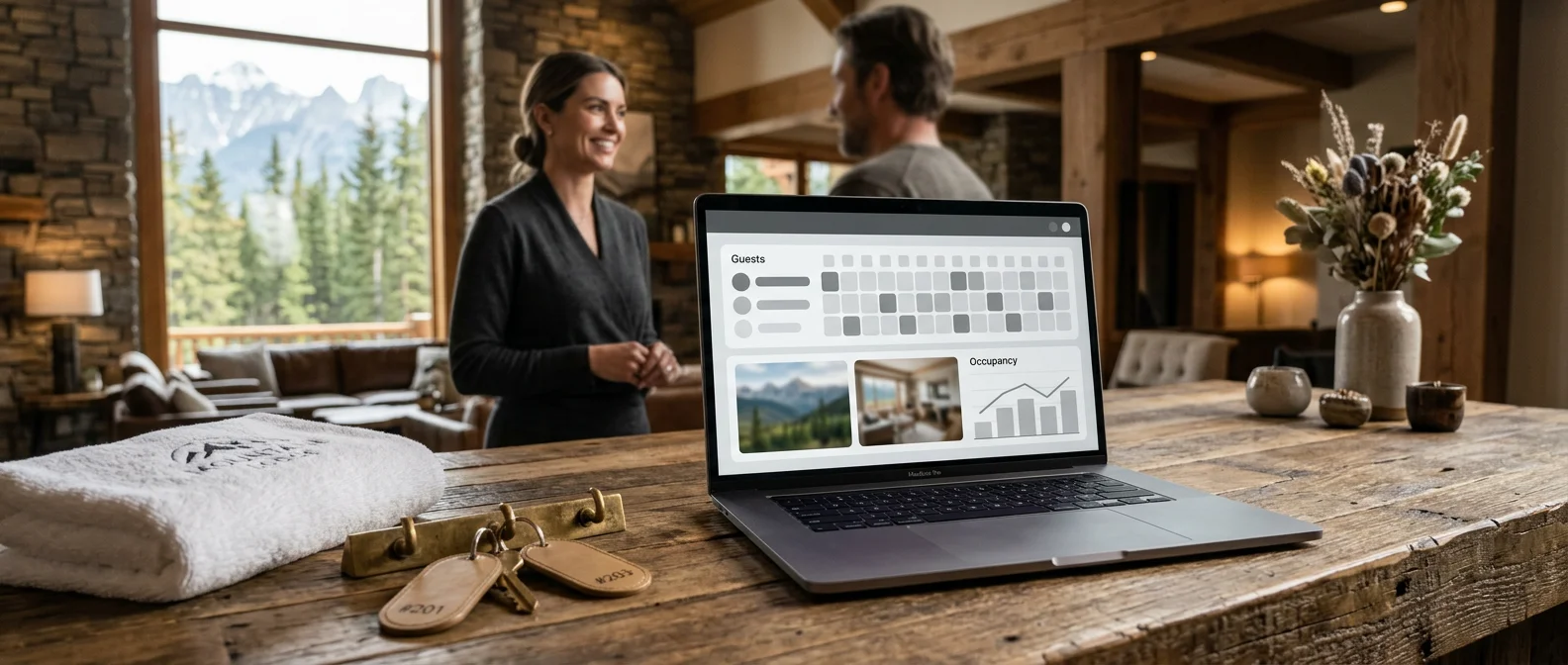
A hotel website is part of the booking journey. For many guests, it is their first contact with the property, the place where they compare it with competitors and the point at which they book directly or return to Booking.com.
Hotels, guest houses, apartment operators and holiday parks need a website that earns trust, conveys the feel of the place and makes booking easy, with each of the following elements contributing to that result.
The first screen must answer the guest's main question
A visitor should understand where they have landed within seconds. The first screen needs to say:
-
what type of property it is
-
where it is located
-
who it suits best
-
what makes it distinctive
-
how to check availability or send an enquiry
A heading such as "A comfortable stay 300 metres from Krupowki" works because it gives a concrete location and benefit. "Welcome to our website" tells the guest almost nothing.
Hospitality websites often lead with a beautiful photograph and no useful detail, leaving the guest unable to identify the property type or its ideal audience. A good hero section pairs atmosphere with specifics because guests buy an idea of what their visit will feel like.
Photographs sell the stay
Random images cannot carry that decision. Your photography should show the standard of the property and answer practical questions:
-
rooms in natural light
-
bathrooms and finishing details
-
the view from a window or terrace
-
breakfast, the spa, garden and parking
-
the property from outside
-
nearby attractions
An 80-image gallery is rarely useful, while a sequence of 20 strong photographs can tell the story cleanly without asking guests to browse an enormous collection.
If you run advertising campaigns, a dedicated landing page can help sell a particular package, season or special offer.
Put booking within immediate reach
Accommodation websites lose enquiries when the call to action is hard to find. A "Book now", "Check availability" or "Ask about your dates" button should appear on the first screen and return at sensible points throughout the page.
Three booking models are common:
Simple enquiry form
A good fit for small properties and individual enquiries. The guest enters dates, the number of people and contact details.
Booking engine
Best when you want to accept direct online bookings. The guest chooses dates and a room, then completes the reservation.
Link to an external system
Quick to set up, but it can convert poorly because the guest is moved into an unfamiliar interface.
If your property uses Profitroom, KWHotel or Hotres, read our comparison of Profitroom, KWHotel and Hotres hotel systems.
The mobile experience has to be excellent
Most guests look for accommodation on a phone, perhaps in the evening, during a journey or between other tasks, and a slow page, tiny controls, a clumsy gallery or an overlong form can end the visit quickly.
On mobile, six details matter.
-
fast image loading
-
a sticky or easily reached booking button
-
a phone number that can be tapped
-
clear prices and amenities
-
simple navigation between room types
-
a form with no unnecessary fields
Guests compare your booking experience with Booking.com. A direct website that is harder to use can lose despite having the better offer.
Location and nearby attractions close the decision
A hotel sells the whole stay, so the location section needs to build useful context around the pin on the map.
Add exact distances and useful context:
-
metres to the centre or main attraction
-
the nearest ski slope, thermal pool, beach or trail
-
whether parking is available
-
clear directions
-
ideas for families, couples and groups nearby
This carries extra weight in tourist destinations. A guest may choose a property because they can picture the entire trip, even when a competing website looks prettier.
Hotel SEO begins with website structure
Hotel SEO reaches beyond a broad phrase such as "accommodation Zakopane". A well-planned website can answer specific searches such as:
-
group accommodation in Zakopane
-
apartment with a hot tub
-
guest house near Krupowki
-
hotel with a spa
-
chalets with outdoor baths
-
accommodation with Tatra Mountain views
-
school trips and summer camps
Each search intent may deserve its own section, page or landing page. Specific descriptions give Google a much better chance of matching your offer with the right guest.
What should a good hotel website include?
Use this practical checklist:
-
A strong first screen with the location and a clear call to action
-
A gallery covering rooms, the property and its main amenities
-
Descriptions of room types, occupancy and equipment
-
An amenities section covering parking, Wi-Fi, spa, breakfast and the garden
-
A visible booking option or enquiry form
-
Guest reviews from Google, Booking.com or other sources
-
A map, contact details and directions
-
Nearby attractions described from the guest's point of view
-
An FAQ answering questions asked before booking
-
Meta tags, Open Graph data and fast-loading images
Summary
A good hotel website is a direct sales channel. It captures the character of the property, answers practical questions and shortens the path to a booking.
The essentials are a strong first screen, excellent images, visible booking, a polished mobile experience, location details, reviews, SEO and a clear account of the offer. If one of those pieces fails, the guest may head back to a booking portal.
At 234.studio, we build websites for hotels and guest houses around direct bookings, fast loading and local Google visibility. See our accommodation projects for Nova Hill & SPA, Zakopane Harenda and Tatres.
Rafał Krzysztofiak
CEO and founder of 234.studio. He has spent over 10 years designing and building websites and web applications for sole traders, growing teams and established companies.
More about the author