KOJS - a Podhale meat processor with an export offer
How we implemented a website for a family business in Jabłonka, bringing its local history, quality certificates, B2B services and international communication together.

CEO 234.studio • June 2026
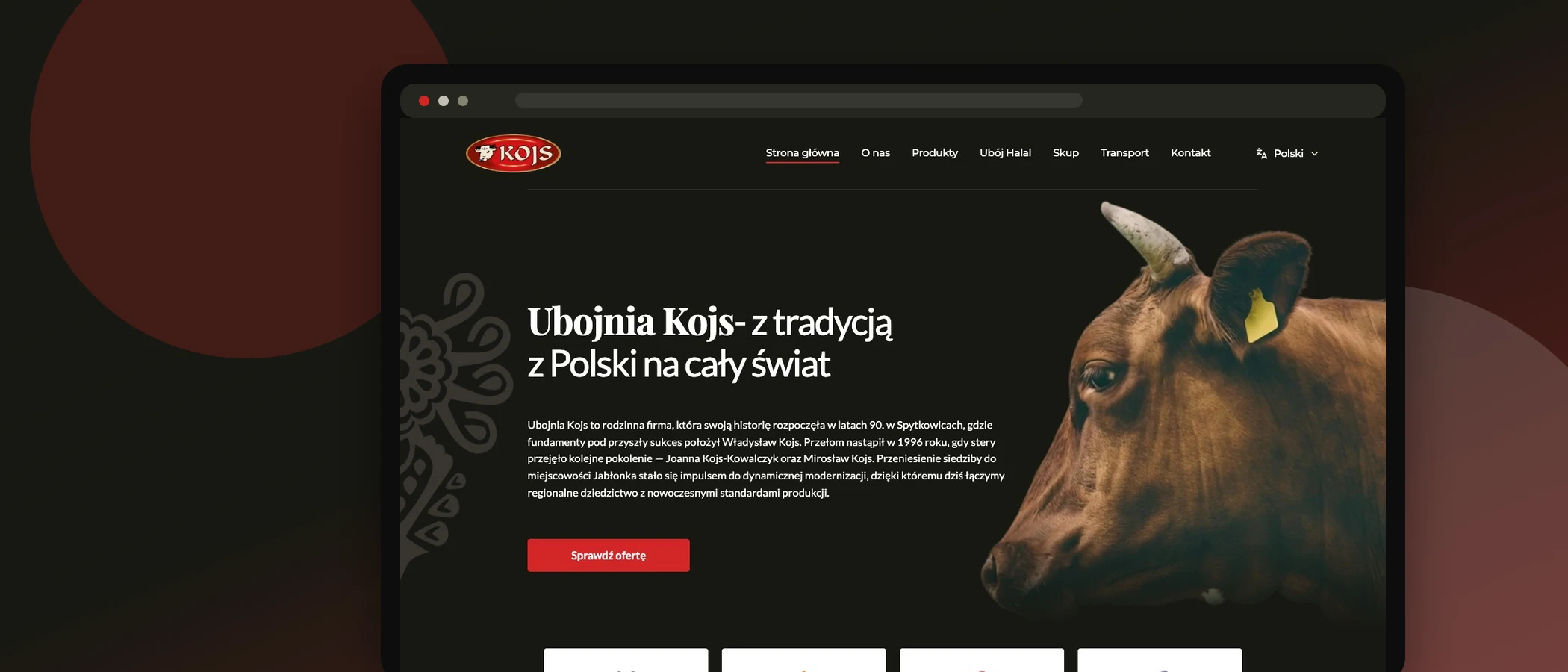
KOJS is a family-owned meat processing plant in Jabłonka that has operated since the 90s. It supplies pork, beef and lamb, purchases livestock, provides certified HALAL slaughter and transports chilled meat. The website organises its broad B2B offer while giving buyers quick access to products, certificates, contacts and individual departments.
Industry
Food / Meat processing
Location
Jabłonka, Podhale
Scope
Website + i18n + SEO
Year
2026
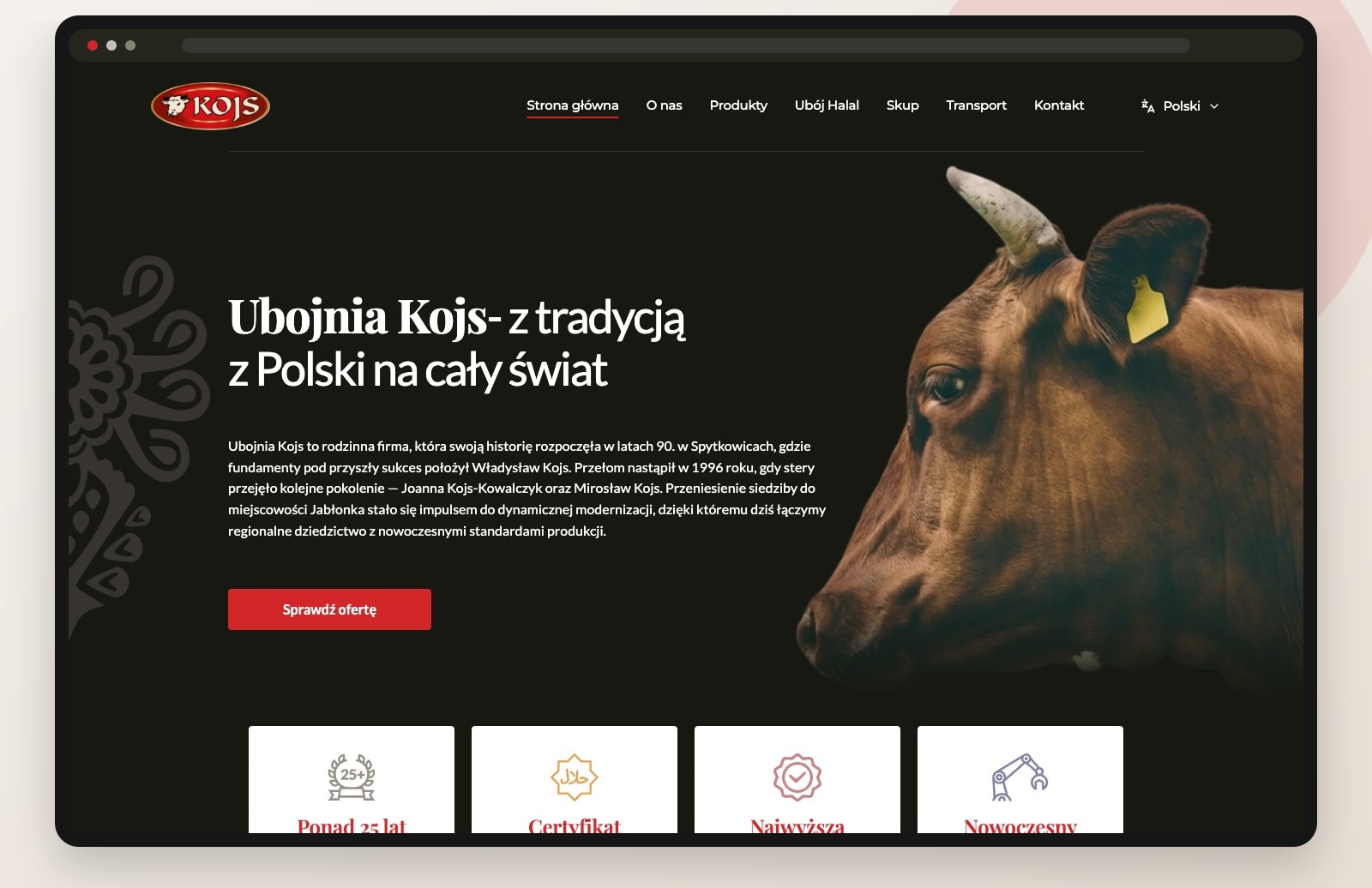
About the project
- Pork, beef and lamb for B2B customers
- Certified HALAL ritual slaughter
- Livestock purchasing and slaughter
- Refrigerated transport for meat and frozen products
- Domestic sales and international export
A long family history and a modern plant
KOJS has deep family and local roots, yet operates in a demanding B2B sector. The site needed to connect that tradition with clear facts about modernisation, production capacity and quality.
Several audiences within one offer
Livestock purchasing, slaughter, transport, sales and export each have their own contacts. Clear department routes and separate product sections replaced one vague general path.
Trust through certification
Food buyers look closely at quality, hygiene and process compliance. HALAL, BRC and SGS certificates had to remain visible without taking over the page.
What we did
Mapping the offer
We separated products, HALAL slaughter, livestock purchasing, transport and contact details. A B2B buyer can now reach the right department without reading the whole website.
Implementing the visual design
We translated the Skorpius design into a working website with a strong dark aesthetic, a red brand accent and large photographs of the plant and its products.
Company history and credibility
A timeline covers 1990 and 1996, later plant modernisation, certification and environmental responsibility.
Product offer and B2B specifications
Pork, beef and lamb lead into individual subcategories, supported by slaughter capacity, machinery, export and B2B customer metrics.
Responsive development and SEO
Quick loading, Google visibility, social metadata, language versions and mobile layouts make the service useful at home and abroad.
"A manufacturing website should organise a complex offer, shorten the route to the right department and establish trust before anyone picks up the phone."
1950 units
Daily capacity
10 countries
Export
3 groups
Products
HALAL/BRC/SGS
Certificates
These figures describe this specific project. Results for another business will depend on its starting point, market and available data.
KOJS speaks to local farmers, procurement teams, commercial partners and export customers. Simple navigation, precise quality language and ready access to contact details serve all four groups.
Summary
The KOJS website shows the scale of a Podhale family business without losing the practical detail. Products, HALAL slaughter, transport, history, certificates and department contacts are organised for B2B and international buyers.
Planning something similar? Read more about how we build bespoke business websites.
Rafał Krzysztofiak
CEO and founder of 234.studio. He has spent over 10 years designing and building websites and web applications for sole traders, growing teams and established companies.
More about the author